

The five-element COA every research buyer checks
Most peptide sites treat the certificate of analysis as a trust badge. They put “third-party tested” on the product page, maybe link a single sitewide PDF, and consider the box ticked.
Sophisticated buyers in this category do not read it that way. They open the document and check specific things, and if those things are missing they assume the worst, because in a category with this much variance in supply quality, assuming the worst is the rational default.
Here is what they are actually looking for.
1. The lot number matches what is in the cart
This is the first thing a serious buyer checks and the one most sites fail. A COA is a statement about a specific batch. A COA for some other lot, or an undated document with no batch reference, tells the buyer nothing about the vial they are about to receive.
The standard set by leading research suppliers is per-batch COA downloads accessible directly from the product listing. Not a single sitewide PDF. Not a badge. The document for the lot you are shipping.
If you take one thing from this article, take this one. Everything else is refinement on top of it.
2. It is recent
Dated within the last twelve months. An older document raises an obvious question about whether it describes current supply, and buyers who have been burned before will not give you the benefit of the doubt on it.
3. The lab is named, and accredited
“Third-party tested” without a lab name is not a claim. It is a shape that resembles one.
Name the facility. ISO/IEC 17025 accreditation is the standard to look for, and third-party options used in this industry are neither expensive nor hard to find, typically running in the low hundreds of dollars per sample. There is no good reason to withhold the name, which is exactly why withholding it reads badly.
The same logic applies more broadly: pages that identify specific auditing partners with dates and a verifiable link outperform generic purity guarantees. Specificity is the signal. Anyone can print a badge.
4. Purity and identity, with methods
Two numbers and two methods:
- Purity by HPLC. The working benchmarks are ≥98% for research grade and ≥99% for premium.
- Sequence identity by mass spectrometry. Purity alone tells you the sample is clean. It does not tell you it is the right compound.
That second point is worth dwelling on, because it is the one buyers with lab backgrounds care most about, and it is the test most commonly missing from a thin COA. A 99% pure sample of the wrong molecule is 99% pure.
5. A contaminant panel
Heavy metals and microbial results, each clearly flagged as passing or not detected. Best-in-class suppliers go further:
- Endotoxin by LAL assay
- Microbial limits
- Residual solvents by GC-MS
- Moisture content by Karl Fischer titration, typically targeting under 6%
Moisture is the one operators tend to skip and the one that most predicts whether the product survives storage, which is a subject worth its own article.
What a complete document contains
Assembled, a complete peptide COA has: product name and sequence, batch or lot number, testing date, authorised signature, acceptance criteria alongside actual results, the issuing laboratory's name, and the methodology used.
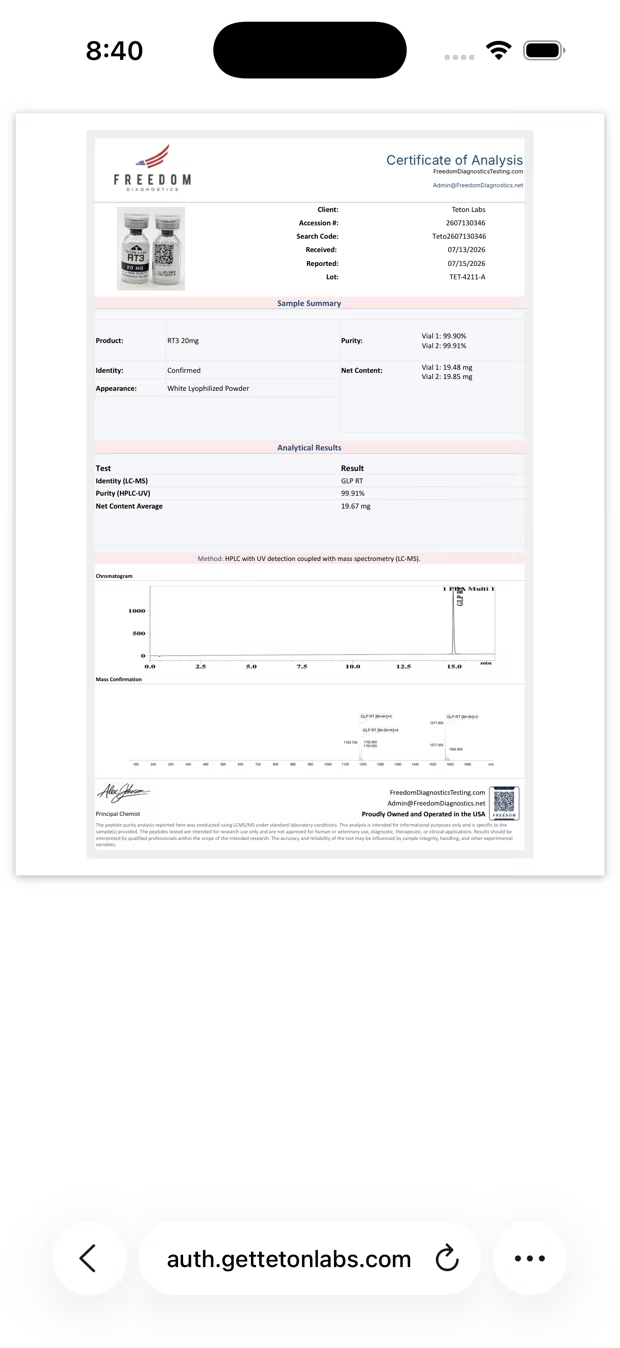
PQ-4211-A, a report date, purity measured per vial with the method stated, and identity confirmed by mass spec. This is a real certificate from a store running on pep.app, reachable in two taps from the product page.The acceptance criteria versus actual results pairing is subtle and matters. A number on its own is a number. A number next to the threshold it was measured against is a result.
Where to put it
Three practical points that separate sites that use COAs well from sites that merely have them:
- Reachable from every product, in one click, without an account.
- Keyed to lot number in a searchable library, so a buyer holding a vial can find the document for the vial they are holding.
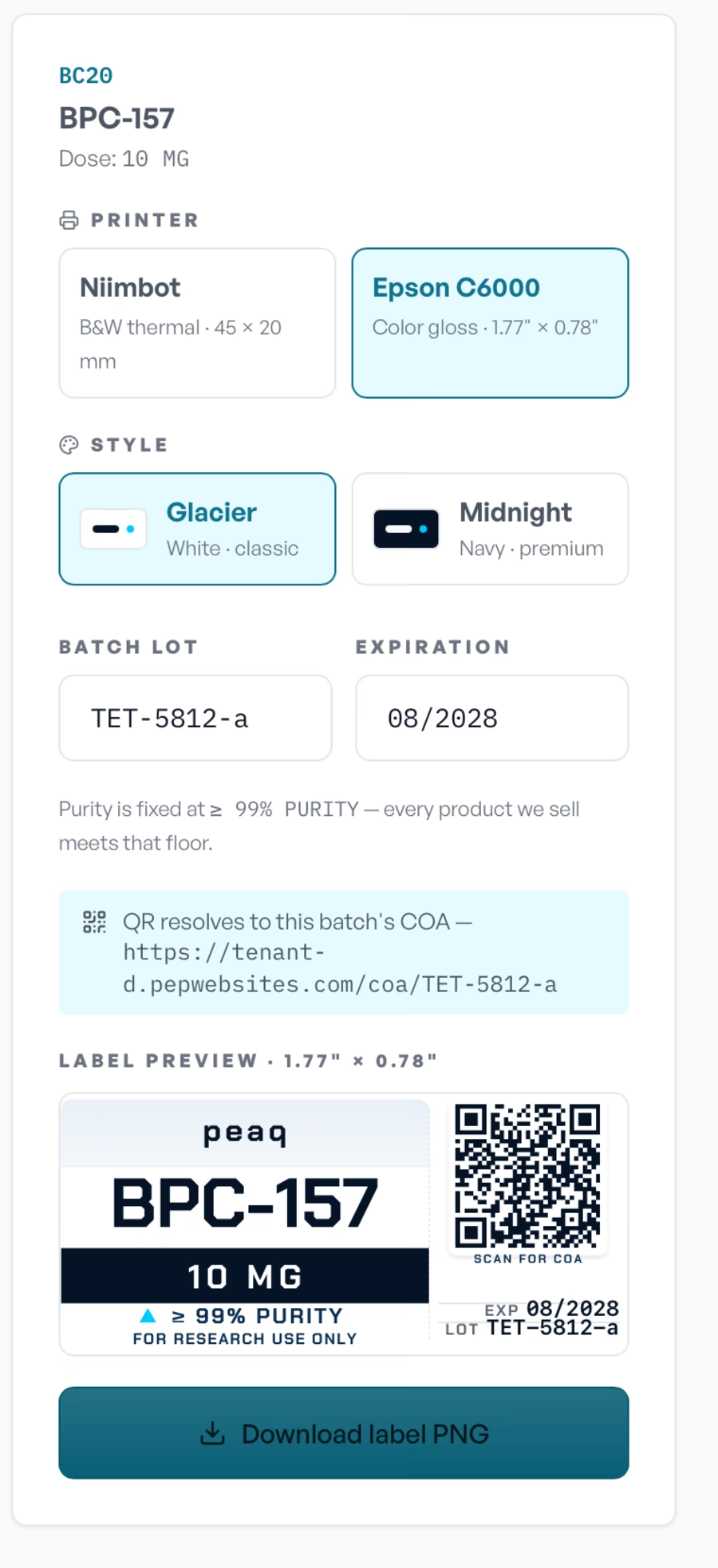
- Linked from the packing slip, by URL or QR code, so the connection survives the box arriving.
On QR codes specifically: linking packaging to a live COA is a genuine credibility differentiator borrowed from adjacent regulated categories. It is not a legal requirement for research peptides, and anyone telling you otherwise is selling something. Treat it as a way to be better than the category, not as compliance.
Why this is the differentiation
It is worth being honest about the evidence here. No controlled study exists measuring COA display against conversion on peptide product pages specifically. The direction is not seriously in doubt, and it follows from buyer behaviour in adjacent categories, but anyone quoting you a precise lift percentage for this vertical is making it up.
The stronger argument is not conversion-rate arithmetic anyway. It is that documentation is one of the only things you can compete on that does not require making a claim about what the compound does.
In a category where you cannot talk about benefits, purity, testing, traceability, and handling are the substance of the pitch. Most competitors are interchangeable precisely because they compete on implied outcomes instead. The COA is where a serious operator gets to be visibly different.
Your COA is also an underwriting document
Processors ask for COAs with assay data as part of a merchant application. Here is the complete file they work from.
Get the Payment-Approval Checklist (PDF) →Keep reading
→ Cold chain for lyophilized peptides: moisture, not heat → Lot traceability: answering "who received Lot X?" in minutes → What you can and cannot say about a research peptide → Research-use-only compliance basicsThis guide is general information, not legal or scientific advice. Testing standards, accreditation requirements, and best practices vary by supplier and application; benchmarks described are industry norms rather than regulatory mandates. Confirm testing requirements appropriate to your products with qualified professionals.